Reflected Light
Light Bounces
Take a look at the two photos of this sculpture below. What is different between them? What is causing this difference?
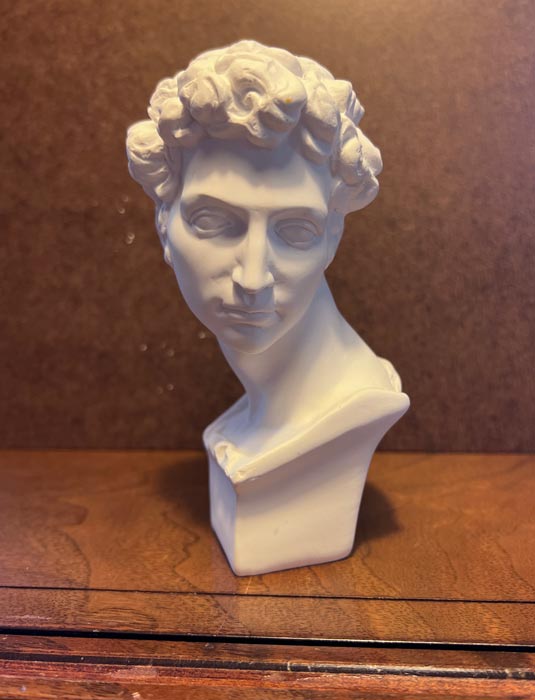
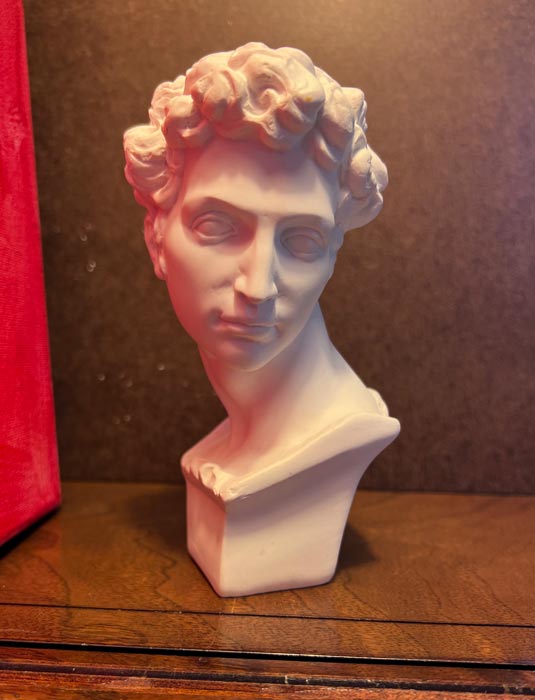
Light bounces off objects and onto nearby objects. Above are two photos. Each shows the same small sculpture. One photograph also has a canvas painted bright red just to the left of the sculpture. If one looks carefully one can see the red color is reflected in the left half of the sculpture. Reflected light is often easier to see on lightly colored, highly reflective, or white object, but light is bouncing in all directions, even onto the darker objects.
This sculpture is a bust of Michelangelo's Giuliano de Medici from the Medici Chapels in San Lorenzo, Florence.

Look Closer
If one looks close enough, one might even see blue light and yellow light in both images (aside from the red in the second one). The yellow light comes from a light bulb. The blue light is light from a nearby window. This photo was taken when it was daylight outside and some of that daylight is coming into the house and has bounced onto the bust. The blue is more evident in the shadows. In reality, the blue is everywhere, but it is just overpowered in the areas where the yellow light (from the lightbulb) hits and where the red light (reflected off the red canvas) hits. This blue light is also the blue light that is in the shadows on a sunny day. The blue light is light from the sky, that is not directly from the sun.In Practice
In this painting, one can see the red light of the fabric bounce up onto the downward facing surfaces of this skull while a white light provides the majority of the illumination from above to the left.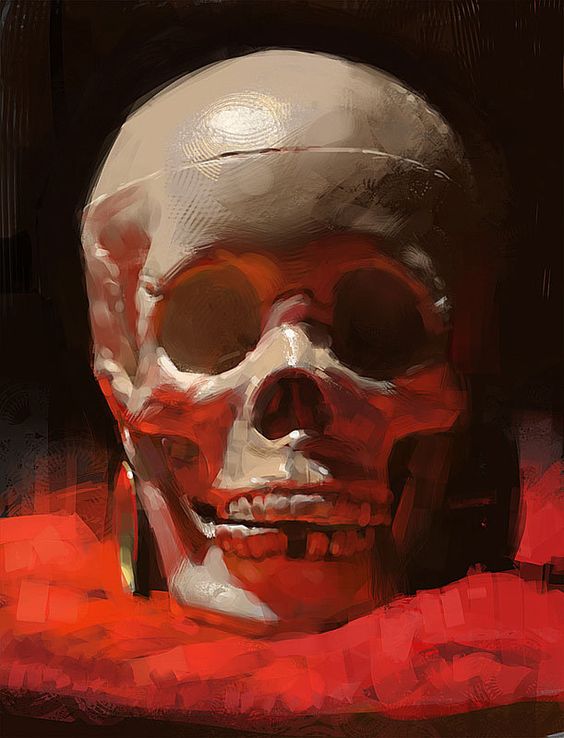
Reflected Light in Masterworks
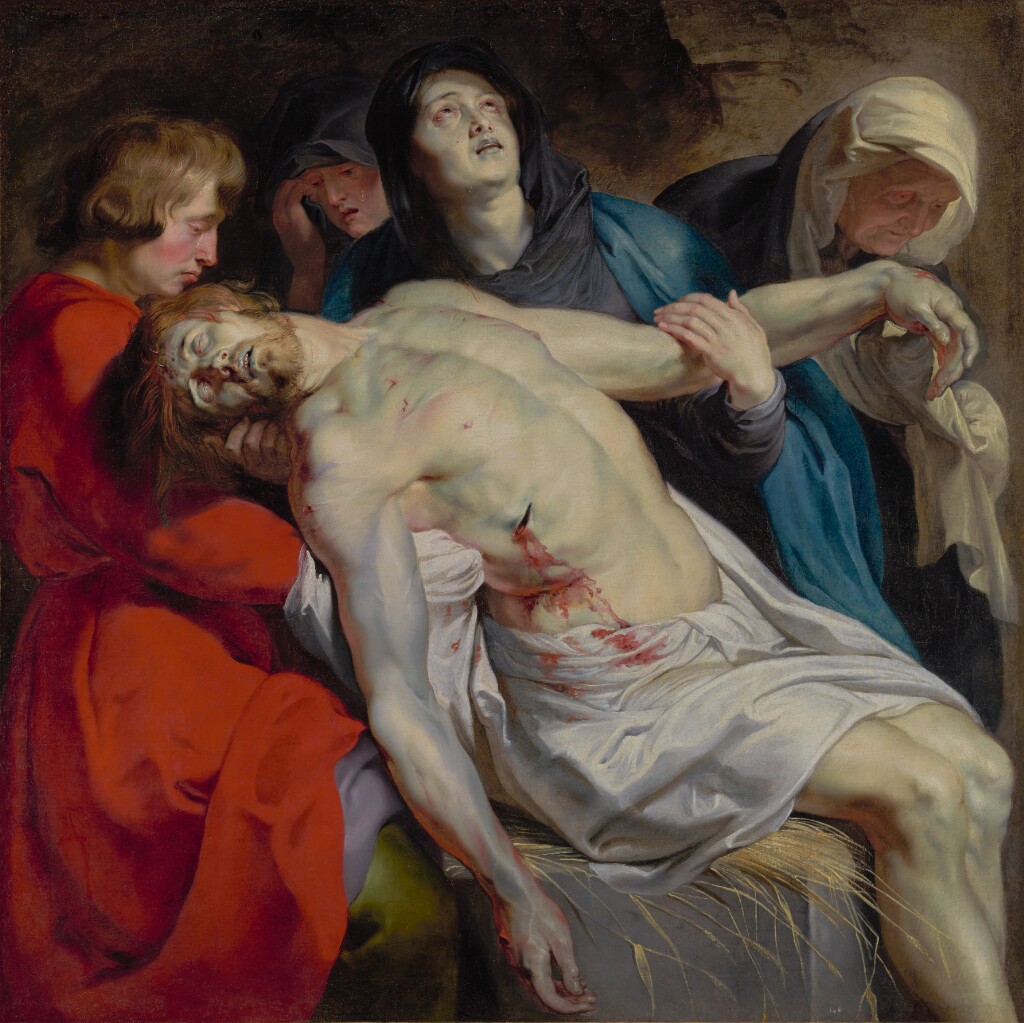
Notice the reflected light on the right arm of Christ in the Rubens painting below. Also look closely at the refelcted blue on the white head scarf of the figure on the right, the reflected blue on the lower neck of the woman holding Christ, the color under the left arm of Christ, the color on the lower right torso of Christ, even the back of the right thigh of Christ reflects the pale yellow of the straw strands. For closer inspection, a larger image of the painting may be found here at the Getty website.