Analogous Colors
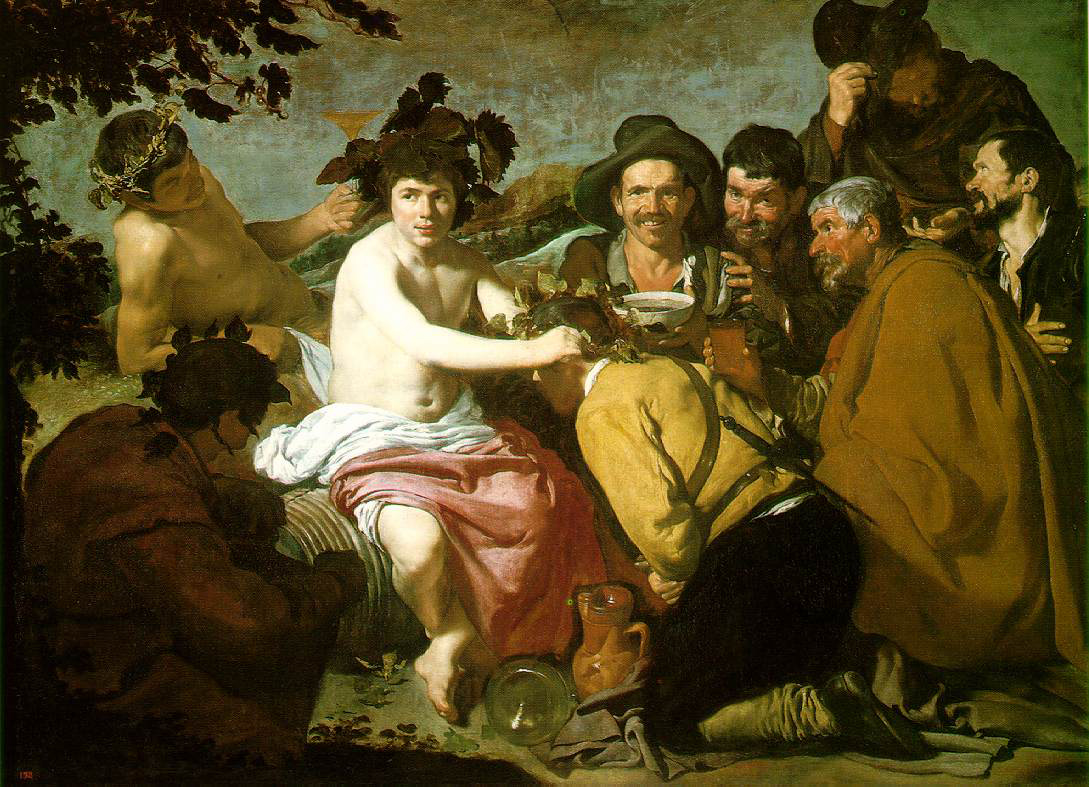
Diego Velázquez, The Triumph of Bacchus, 1628-1629, oil on canvas, 65 x 89 inches.

Velázquez’s utilizes a range of analogous colors for most of the The Triumph of Bacchus, shown above. These analogous colors all contain a bit of green. He skillfully offsets the greens with a complementary red. Also note his effective use of low to medium chroma colors. The effect of the analogous colors is to provide unity and cohesion to the overall image. The complementary red provides emphasis for his subject, Bacchus.
More Analogous Examples
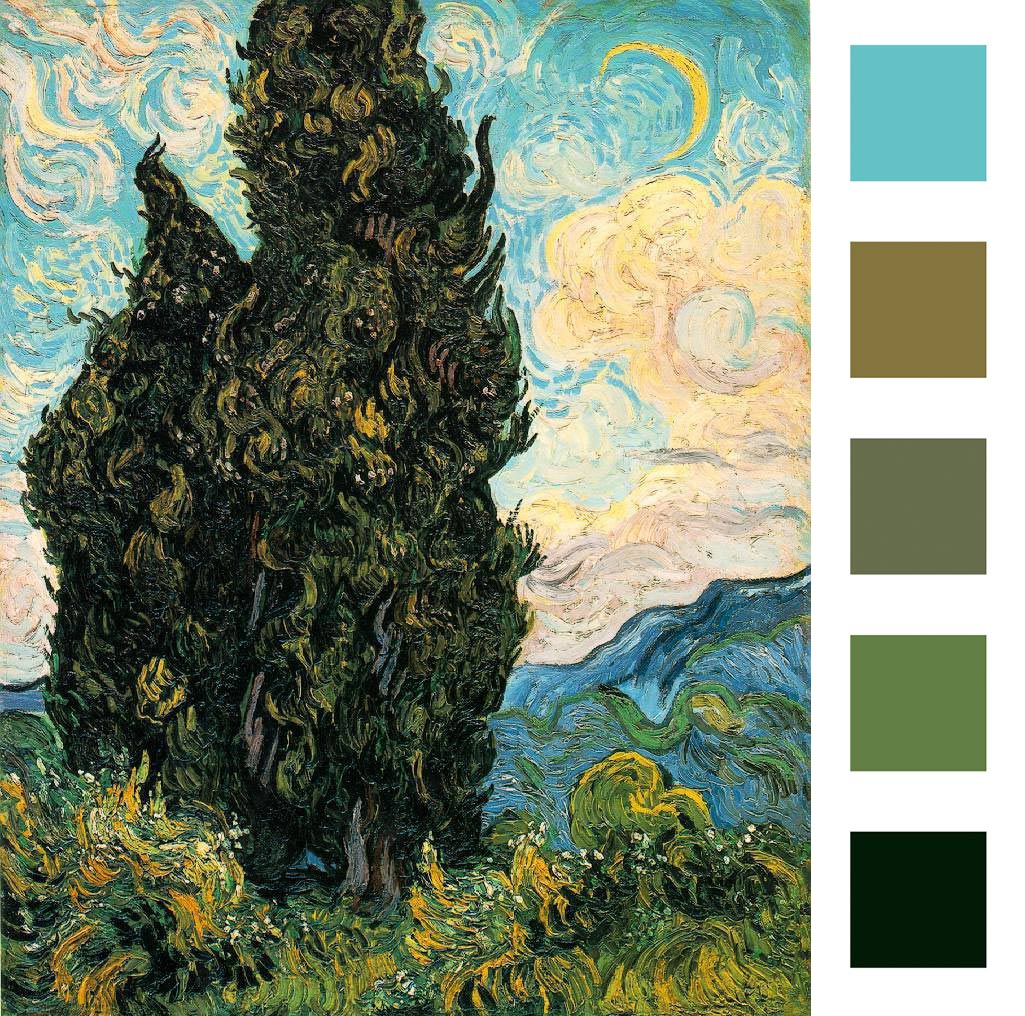
Vincent Van Gogh, Two Cypresses, 1889, oil on canvas, 74 x 93 cm.
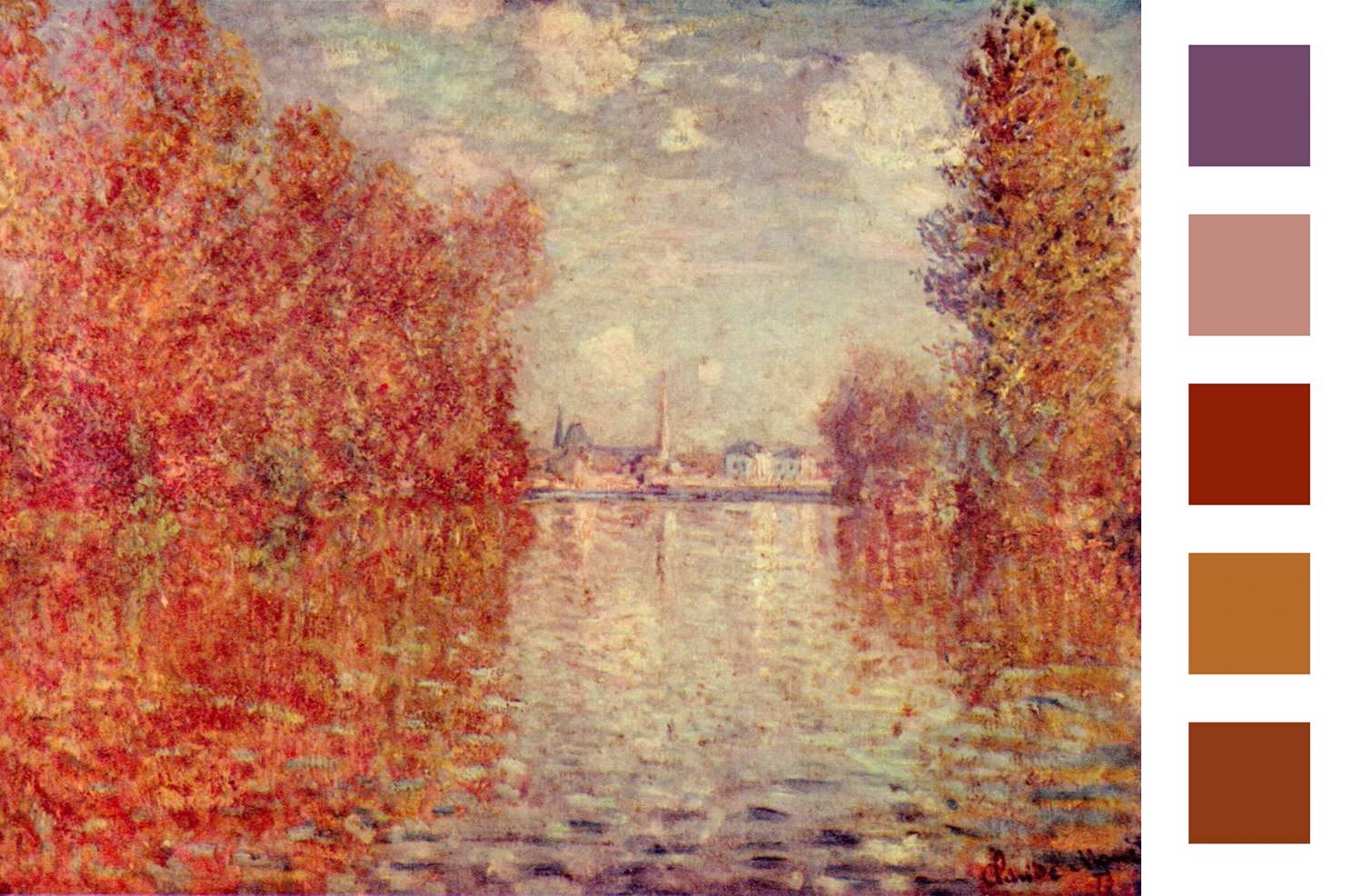
Claude Monet, Autumn in Argenteuil, 1873, oil on canvas.
The use of analogous colors unifies and creates harmony within these images.